How oil lost $28 in June 2026 as Hormuz reopened
By PetrolCast4 min read
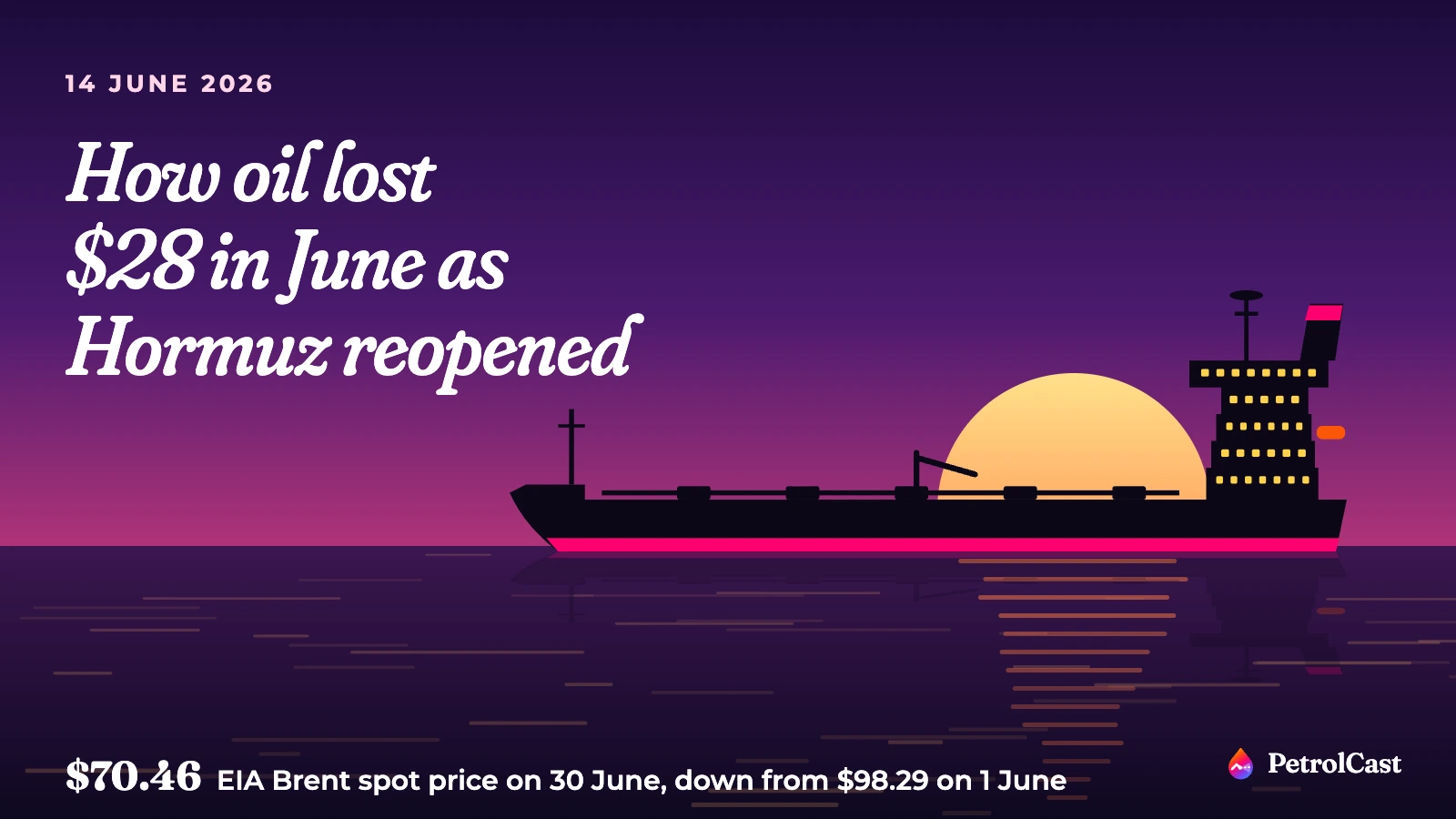
The EIA's Brent spot price started June 2026 at $98.29 a barrel and finished it at $70.46. Most of that $28 fall came after 14 June, when President Trump announced an interim deal with Iran that reopened the Strait of Hormuz. Three charts tell the story of oil prices in June 2026 and the Hormuz reopening: the price of oil, the ships in the strait and the price at the pump.
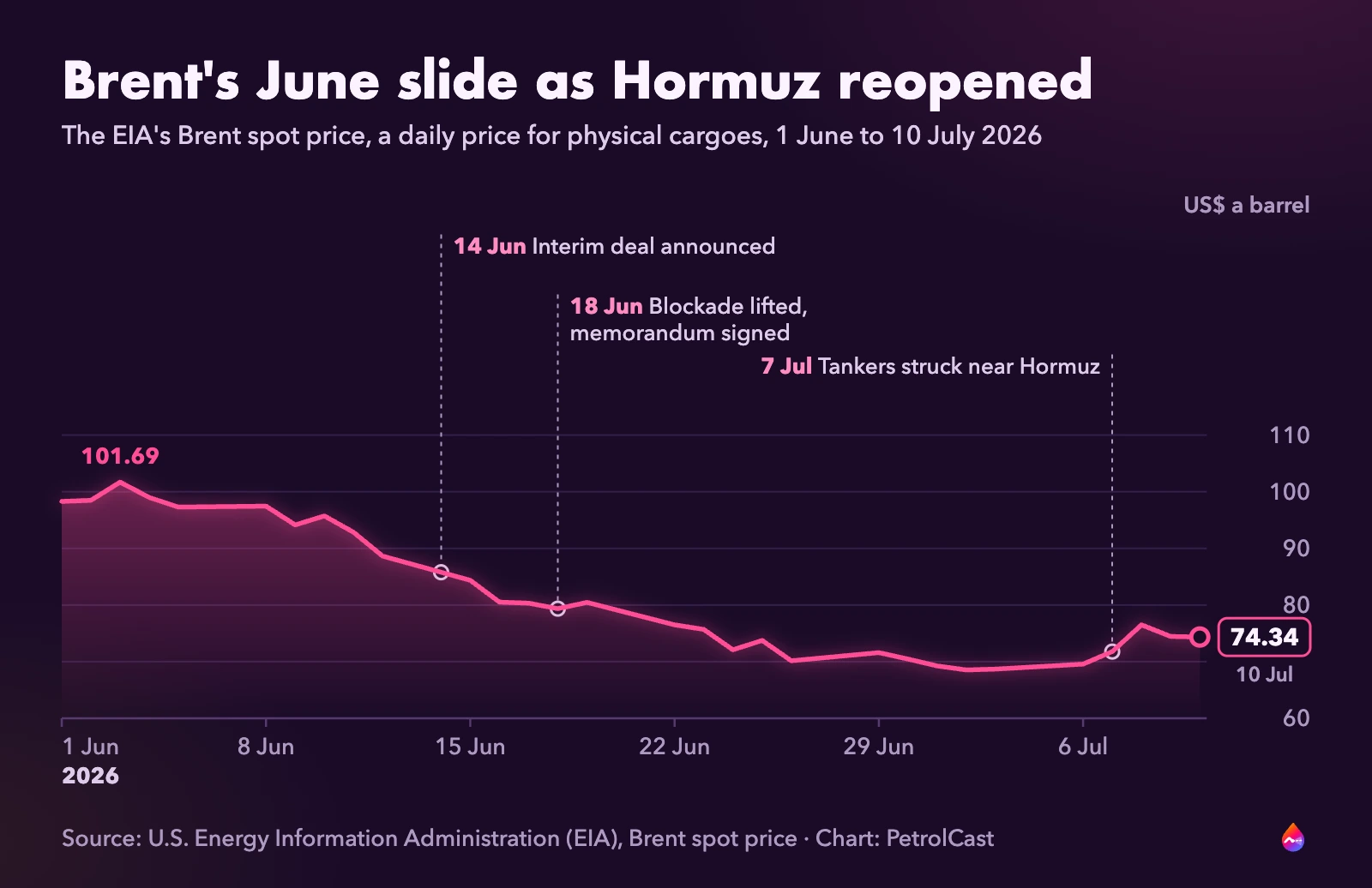
What happened, in order
Pakistan's prime minister was the first to make the deal public. On 14 June President Trump announced it and authorised what he called a "toll free opening" of Hormuz and the end of the US blockade of Iran's ports, Bloomberg reported. He signed a 14-point memorandum at Versailles on 17 June, after the G7 summit, and Iran's state media published photos of President Pezeshkian signing it on 18 June, RFE/RL reported. The memorandum opened a 60-day window for a final settlement. Iran was to facilitate free passage for those 60 days, and the US was to waive oil sanctions straight away.
US forces lifted the blockade on 18 June, the US military said. On 24 June Brent futures fell below $75 a barrel for the first time since the war began on 28 February 2026, when the United States and Israel struck Iran. That day the IEA estimated the UAE's oil exports at nearly 85% of their pre-war level, World Oil reported. On 25 June futures touched $72.24 during the day.
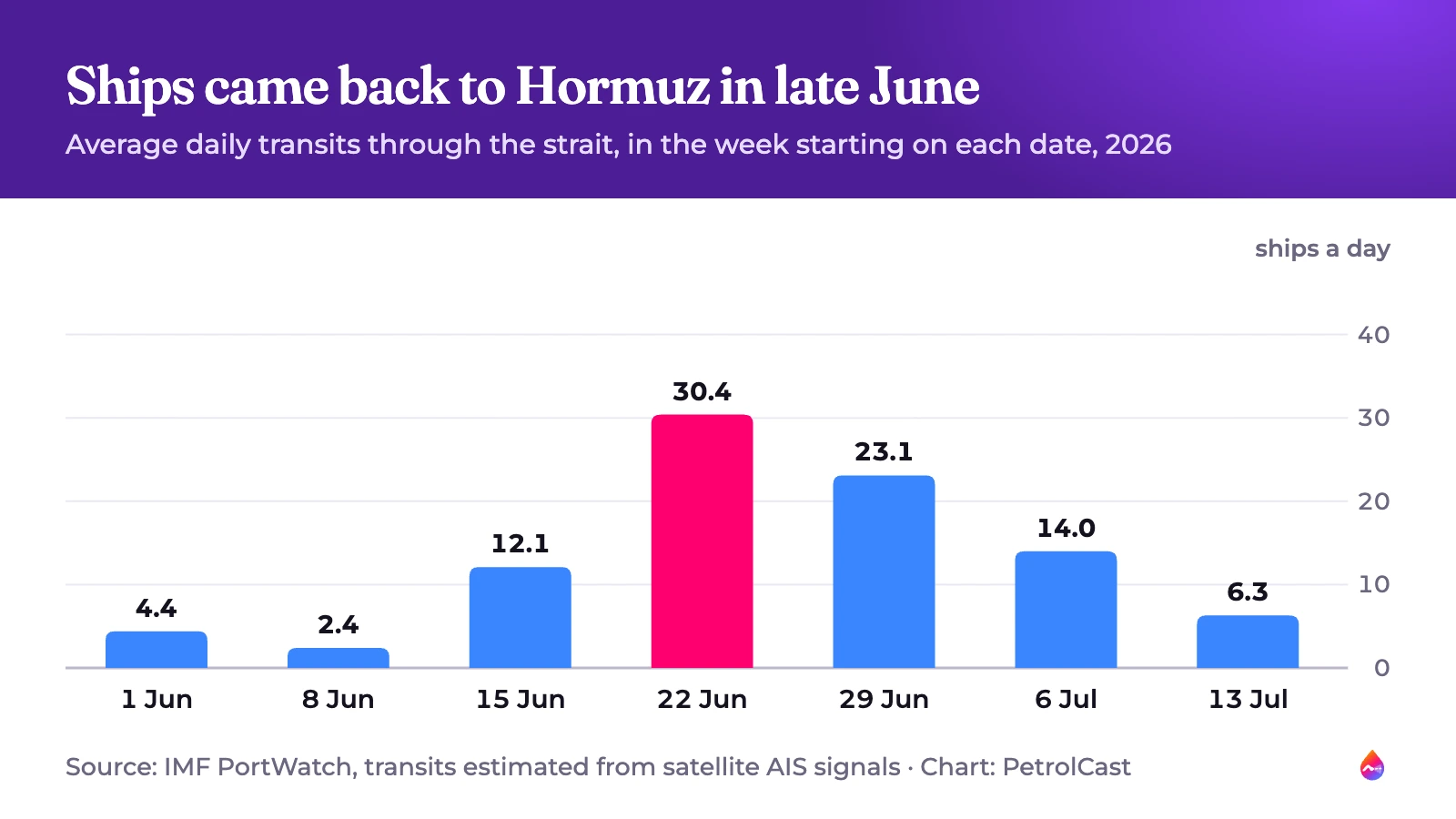
The ships came back, for a while
The fall in price came as ships returned to the strait. IMF PortWatch, which estimates transits from ships' satellite tracking signals, counted no ships crossing Hormuz on 13 or 14 June. It counted 20 on 18 June and 51 on 24 June, the most on any day since 28 February. In the week starting 22 June the average was 30.4 a day. That was still about half the January average of 58.5 a day, and by the week starting 13 July it was back down to 6.3.
Spot and futures
Two Brent prices appear in this story, and they are not the same thing. Brent futures are contracts traded on an exchange, and most news reports quote them. The EIA's Brent spot price is a daily price for physical cargoes. For much of 2026 it ran well above futures because physical cargoes sold at a premium, which the EIA put at more than $25 a barrel in early April.
In late June the two prices came back together. On 24 June, the day futures went below $75, the EIA's spot price was $72.09. Over the month as a whole, the World Bank's average Brent price fell from $107.5 a barrel in May to $85.4 in June.
What drivers saw
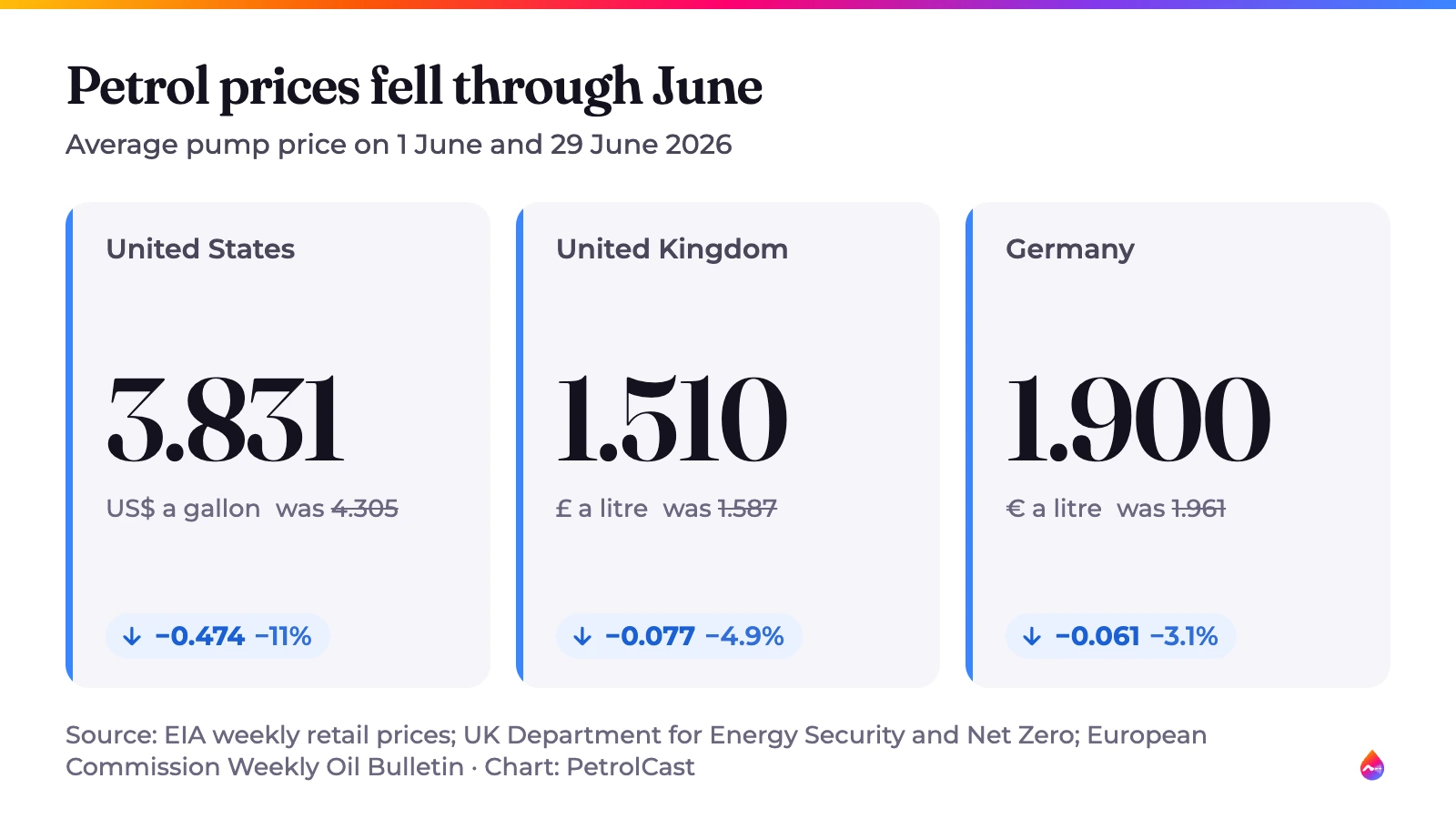
Where pump prices follow the market week by week, they fell through June. The US weekly average for regular petrol went from $4.305 a gallon on 1 June to $3.831 on 29 June, according to the EIA, and AAA's figures showed the average down 14% from late May and below $4 by 24 June. Petrol in the United Kingdom and Germany followed the same path.
Countries that set prices on a schedule followed at their next review. Sri Lanka cut petrol from 434 to 414 rupees a litre on 30 June. On 1 July South Africa cut its petrol price from R27.95 to R25.94 a litre, and the UAE cut Special 95 from 3.83 to 3.29 dirhams. Our US petrol page has every weekly figure.
Then July
The relief did not last long. On 7 and 8 July tankers were struck near Hormuz and the truce broke down, and on 14 July the US blockade of Iran's ports was back in force. The EIA's Brent spot price went from $69.24 on 1 July to $105.32 on 23 July.
More from the blog
All posts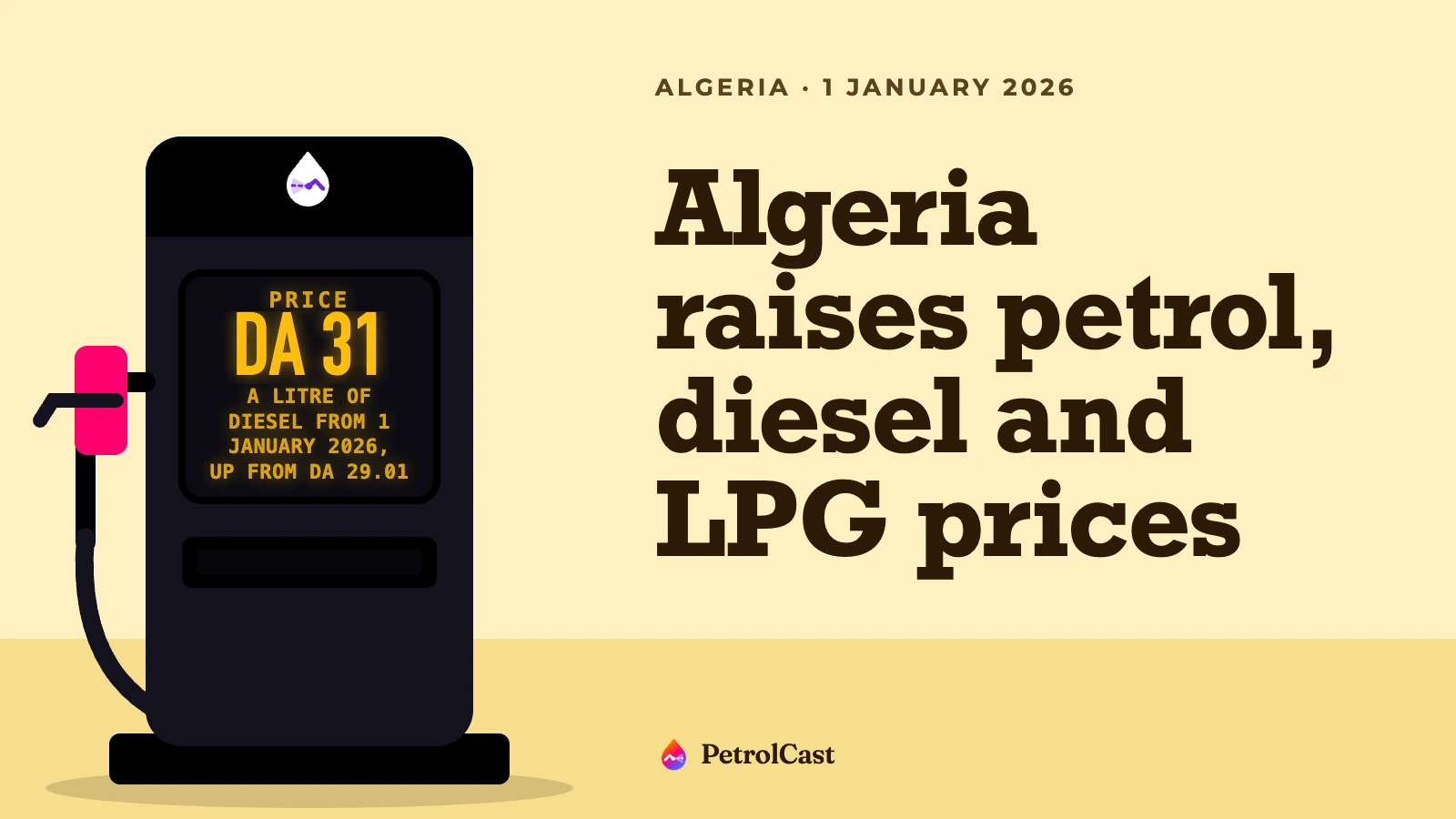
Algeria raises petrol, diesel and LPG prices for 2026
Algeria fuel prices for 2026 took effect on 1 January: petrol DA 47, diesel DA 31 and LPG DA 12 a litre. What changed and what the ministry said.
PetrolCast3 min read
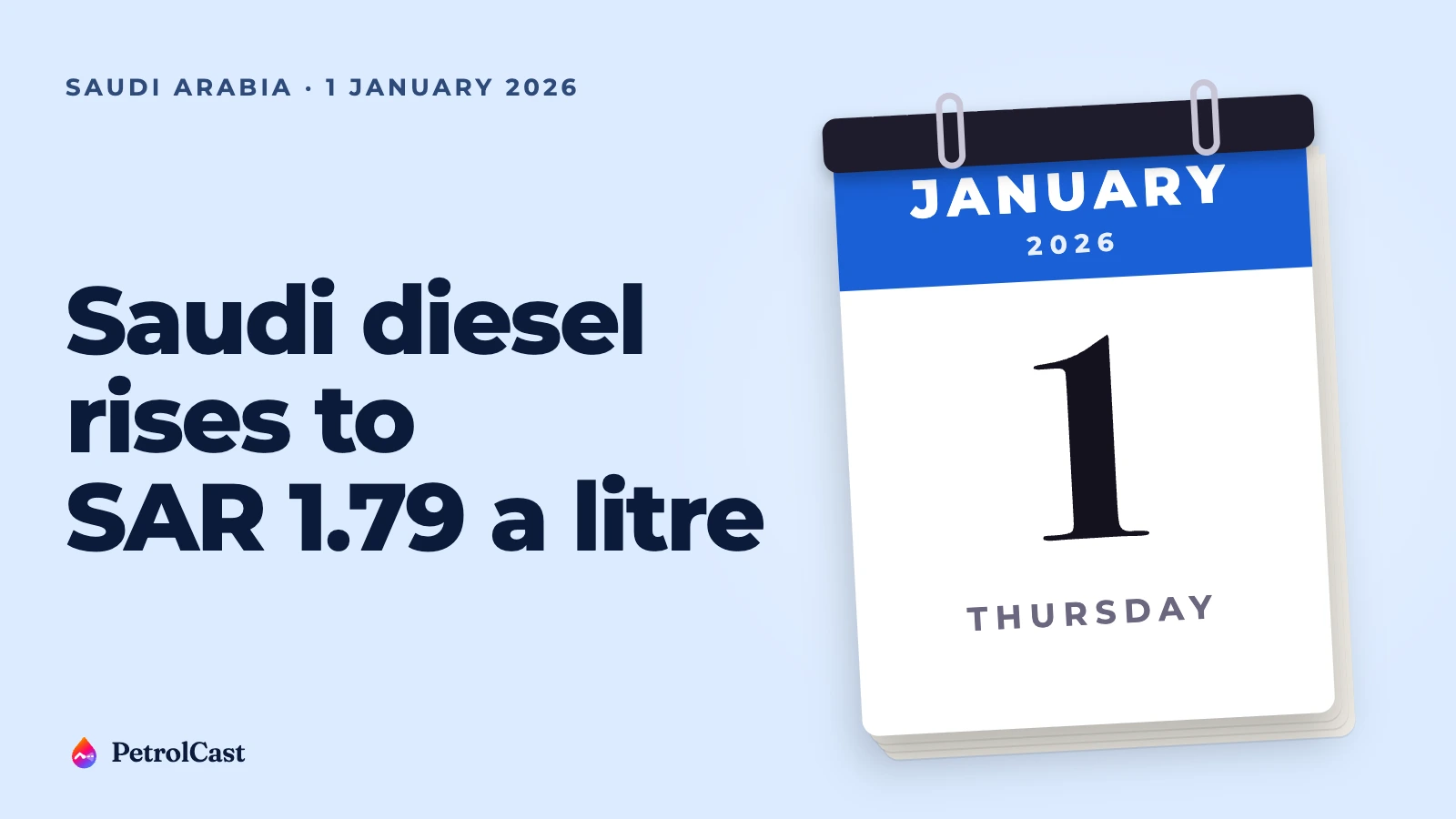
Saudi Arabia raises diesel to SAR 1.79 a litre for 2026
The Saudi diesel price for 2026 rose to SAR 1.79 a litre on 1 January. Why diesel moves once a year, and why petrol and oil prices did not change it.
PetrolCast4 min read

Four petrol and diesel price hikes in India in May 2026
India raised petrol and diesel prices four times between 15 and 25 May 2026. Each petrol and diesel price hike by date, as Delhi passed Rs100.
PetrolCast4 min read
Forecasts are estimates for information only, not financial advice.